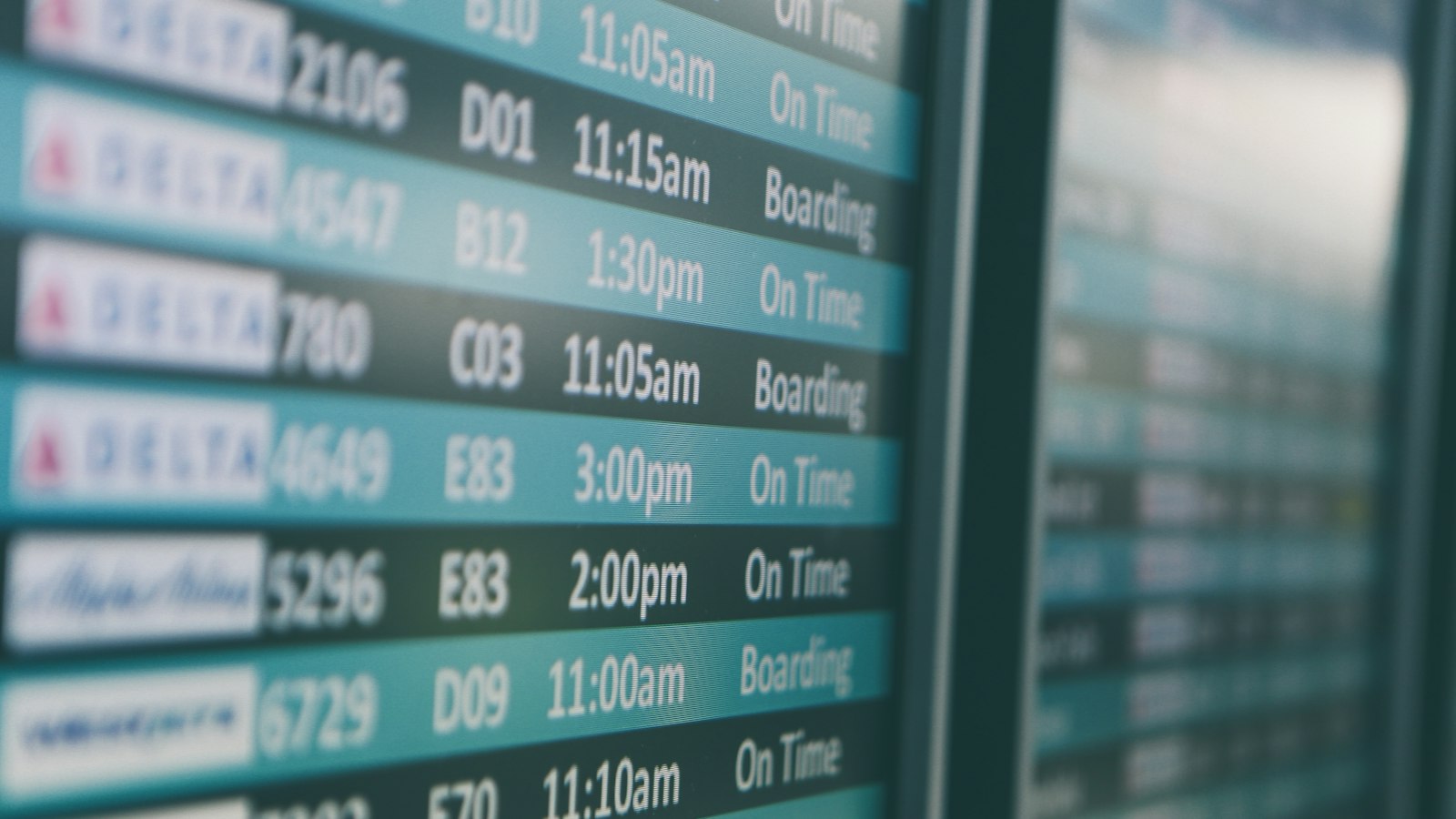
Many companies see personalisation as an email with the customer's first name. Delta Air Lines shows a different approach: communication tied to the passenger's specific situation, giving them the information they need before they have to ask for it.
Why Delta
Delta has long invested in technology that takes uncertainty away from passengers: where the bag is, which gate to go to, what to do when a flight is delayed. The individual parts build on each other, so information from one phase of the trip is used in the next.
The results show in the numbers. In June 2025 The Points Guy named Delta the best U.S. airline for the seventh year in a row. The partnership with American Express, built around the SkyMiles loyalty programme, brought Delta $7.4 billion in 2024 and about $2 billion in the third quarter of 2025, 12% more than a year earlier.
How the phases of the trip connect
Each phase of the trip is designed as part of one whole. Data from one phase is used in the next.
Communication driven by situations, not calendars
Messages are not triggered by a predefined plan but by a specific event: a gate change, a bag being loaded, a delay. Passengers get fewer messages, and every one of them is relevant.
What it looks like in the app
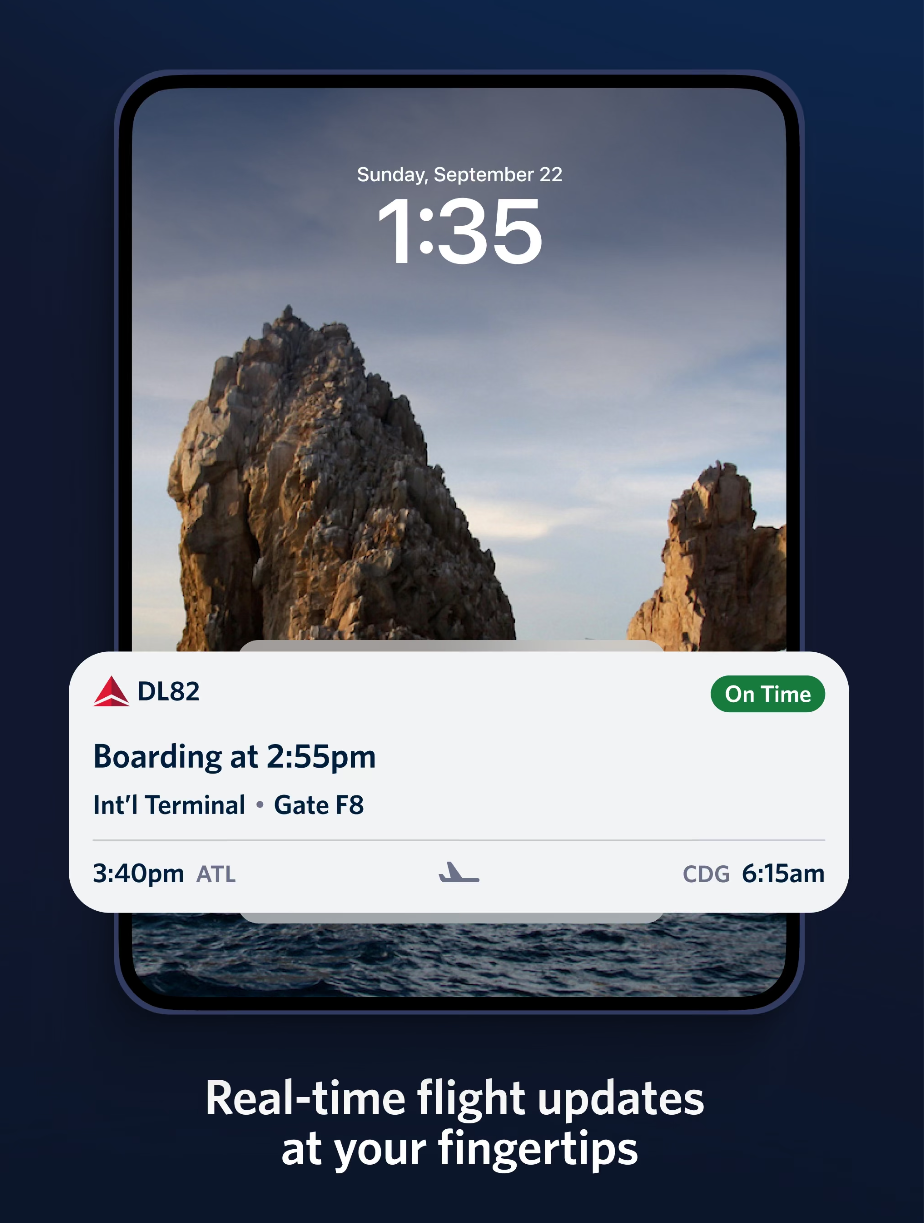
The screenshots come from the Fly Delta app in the App Store (2025). Notice how consistent the visual language and the order of information are across screens.
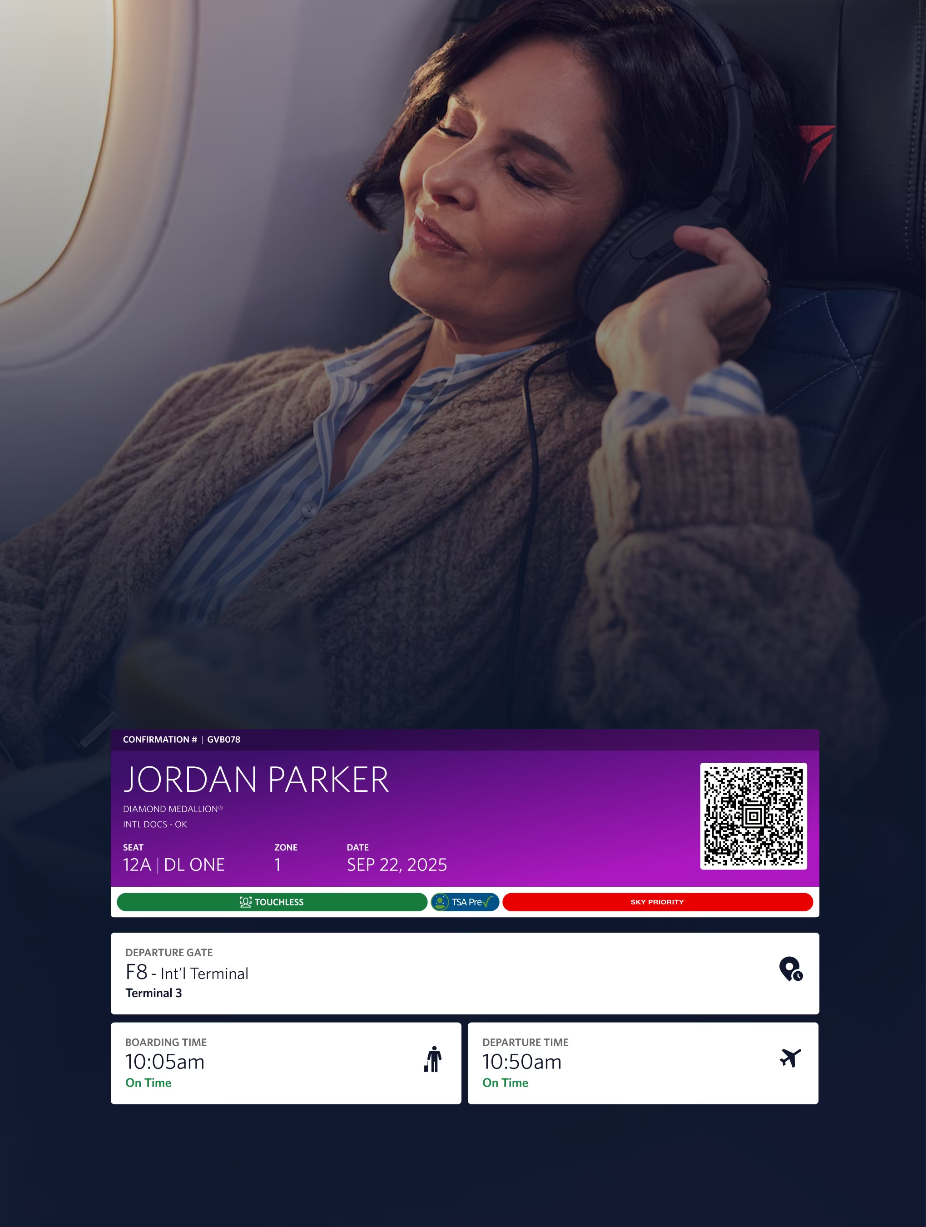
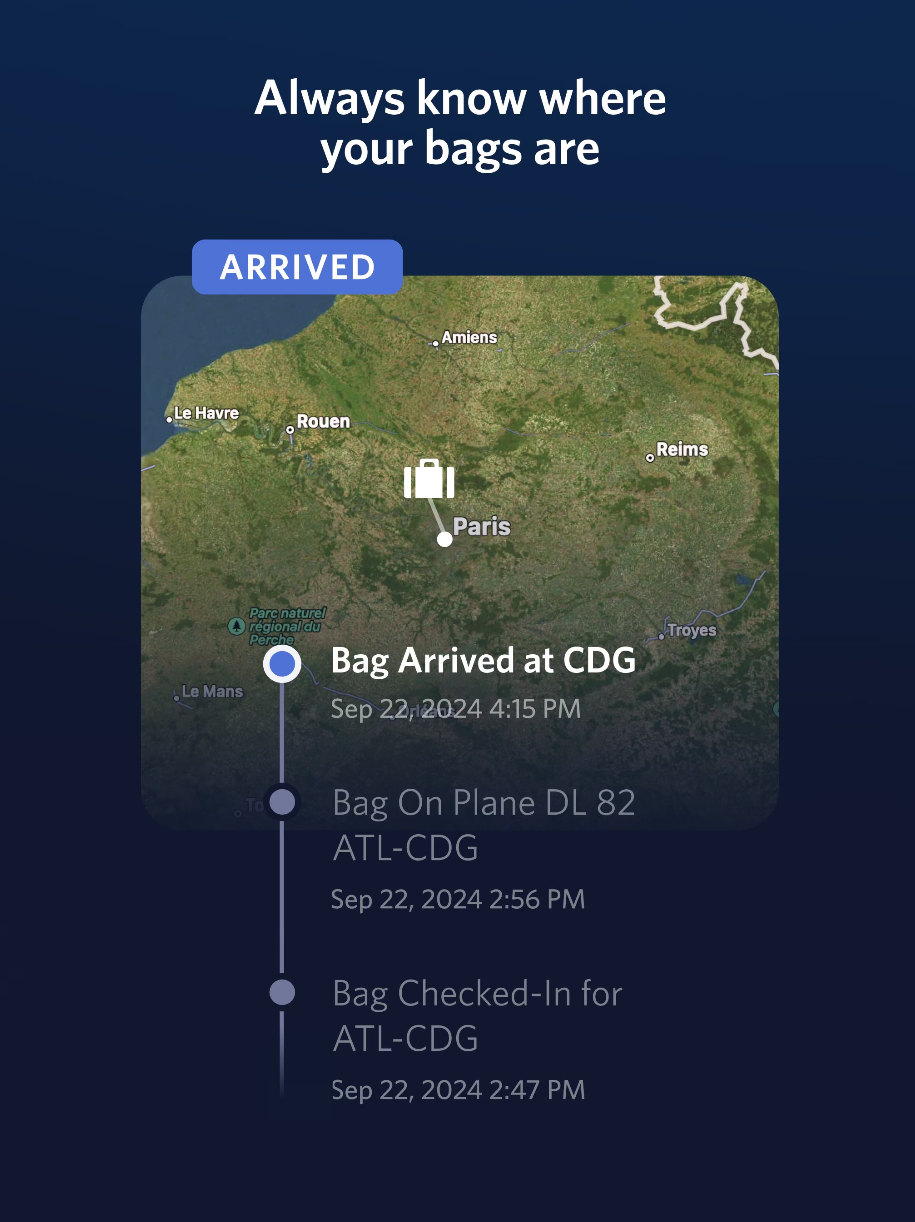
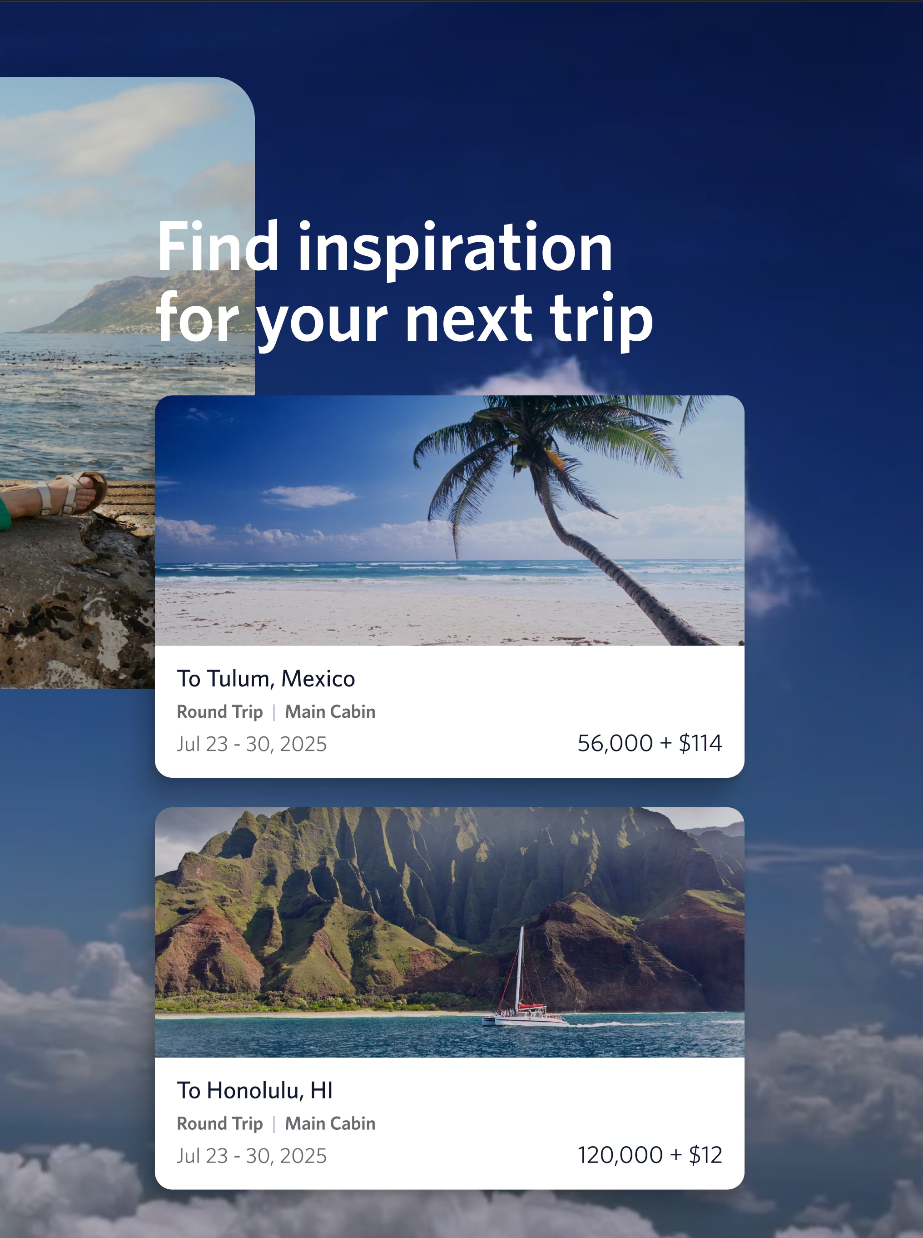
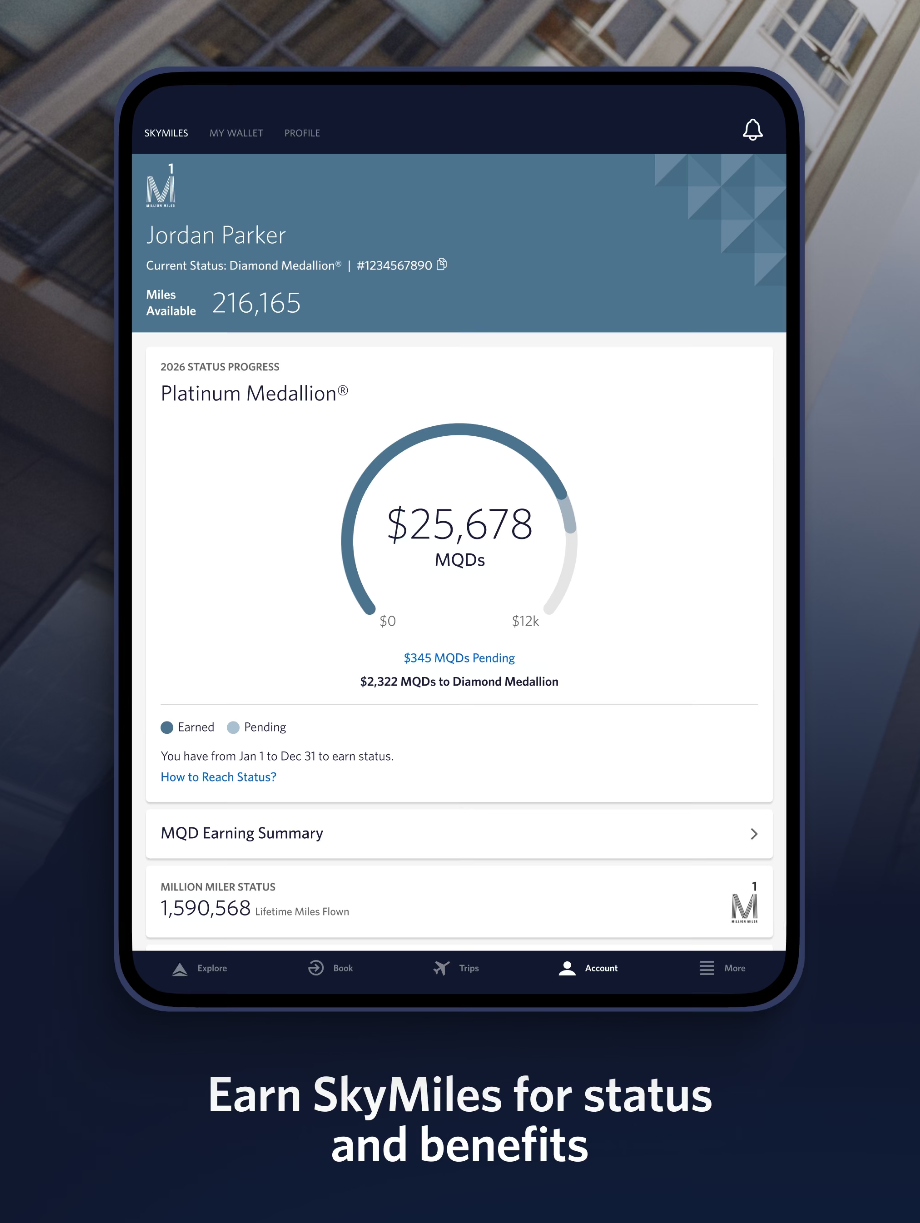
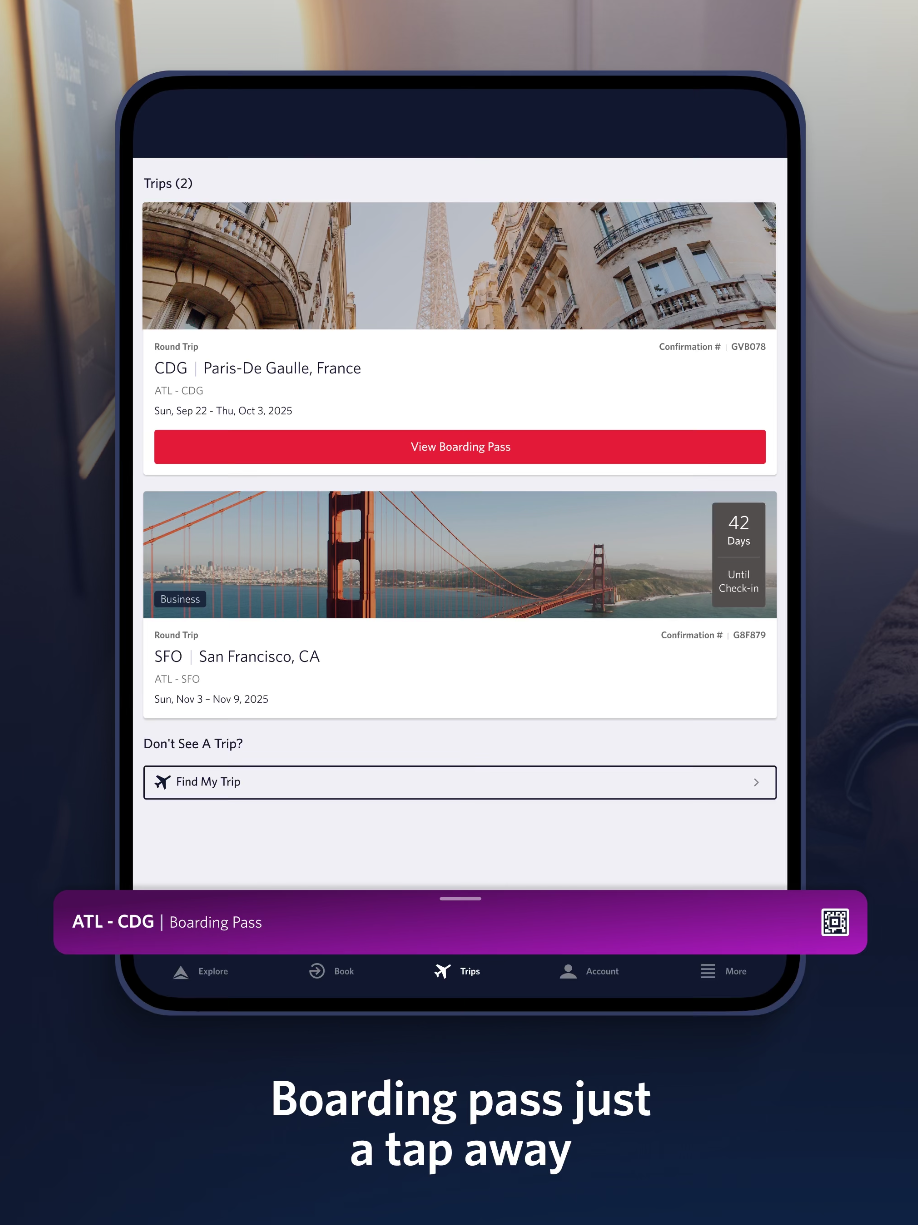
More Fly Delta screens
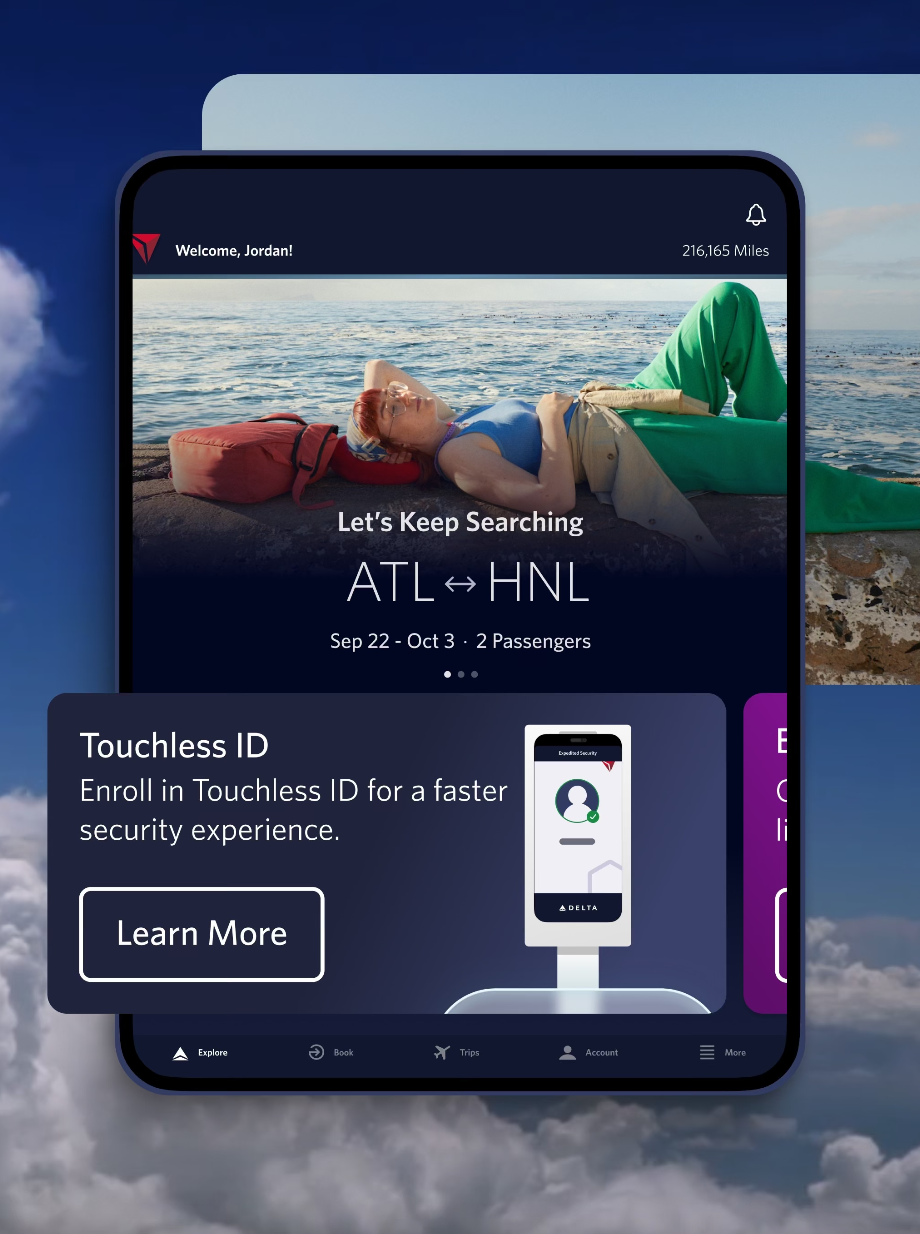
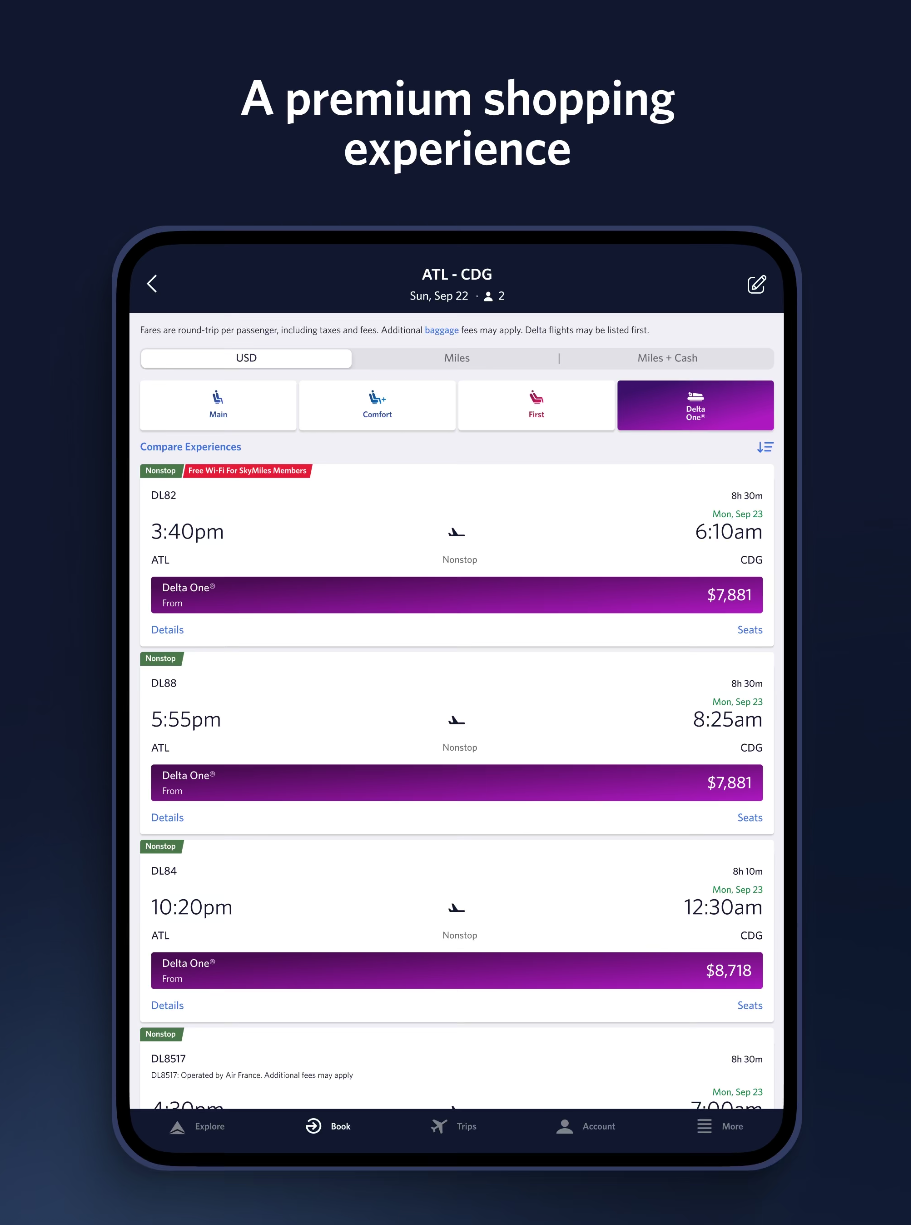
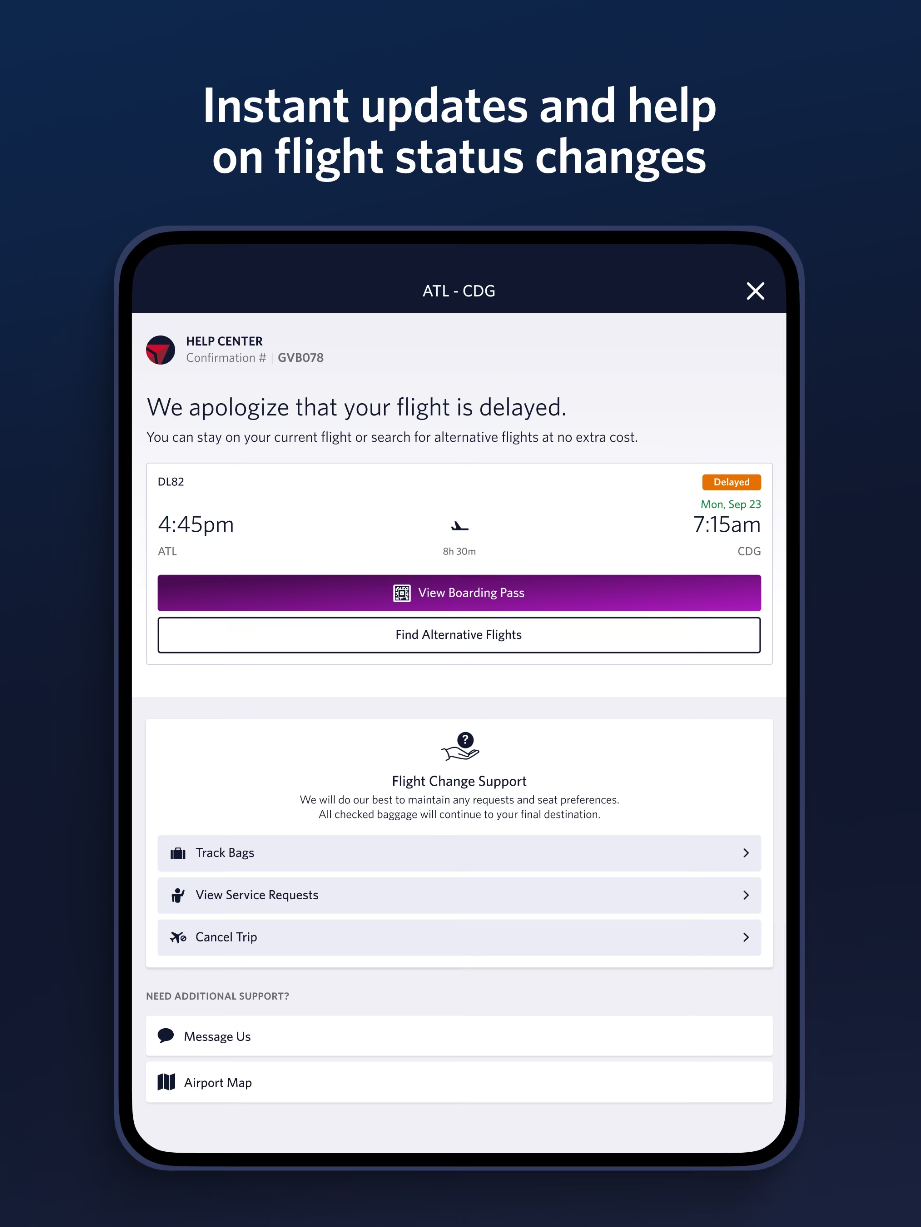
The most important data – gate, boarding time, bag status – is visible without scrolling. The flight card is the one place where the passenger finds everything essential, and the boarding pass opens from anywhere with one tap.
Communication by phase of the trip
| Phase | Channel | Content | Trigger |
|---|---|---|---|
| Booking | email, app | offers based on history | search, unfinished booking |
| Before the flight | push, email, SMS | check-in, documents, gate | upcoming departure, gate change |
| Airport | push, Parallel Reality | wayfinding, boarding | location, time to departure |
| On board | Delta Sync, app | Wi-Fi, entertainment, services | Wi-Fi connection |
| After the flight | push, email | bag status | landing |
| Disruptions | push, SMS, email, app | new connection and other options | cancelled or delayed flight |
The table is a simplified overview based on publicly available information.
The technology behind it
RFID bag tracking
In 2016 Delta announced a $50 million investment in tracking bags with RFID tags. Passengers can see in the app where their bag is.
Parallel Reality
In summer 2022 Delta started a trial of Parallel Reality technology by Misapplied Sciences at Detroit airport. One shared screen shows each passenger their own flight information, in their own language. Participation is voluntary, and Delta says it does not store passenger data.
Delta Concierge
At CES in January 2025 Delta introduced Delta Concierge, an AI assistant in the Fly Delta app. It is meant to alert passengers to an expiring passport and visa requirements, guide them at the airport to bag drop, lounges and the gate, and gradually take on more tasks.
Delta does not invest in technology for its own sake. Each piece addresses a specific uncertainty: RFID the fear of a lost bag, Parallel Reality finding your way at the airport, Concierge the things a passenger would forget.
Personalisation and customer care are not the same
Personalisation is a tactic: an offer based on what the customer did. Customer care as Delta understands it concerns the whole company: a problem is solved before the customer has to report it. Delays are a typical example. Instead of a queue at the desk, the app offers rebooking options right on the phone. I write about working with context more generally in Context instead of hyper-personalisation.
Five principles that transfer to other industries
A message goes out when something happens – a gate change, a bag being loaded – not because it is Tuesday.
The SkyMiles profile connects booking, the app, the airport and the cabin. Passengers don't have to explain again who they are and what they need.
A delay is a cost for an airline. When it is handled quickly and without queues, it builds the passenger's trust.
RFID, digital ID and Parallel Reality each have a clear reason from the passenger's point of view, not only the company's.
For 2024, Delta paid its employees $1.4 billion in profit sharing. Its leadership has long said that satisfied employees are a precondition for satisfied customers.
Delta shows that a better experience does not come from more personalised messages. It comes from a system that gives customers what they need when they need it, without making them ask. The principle works outside aviation too – in e-commerce, banking or energy.